
Something shifted this year, and it happened quietly enough that you might have missed it.
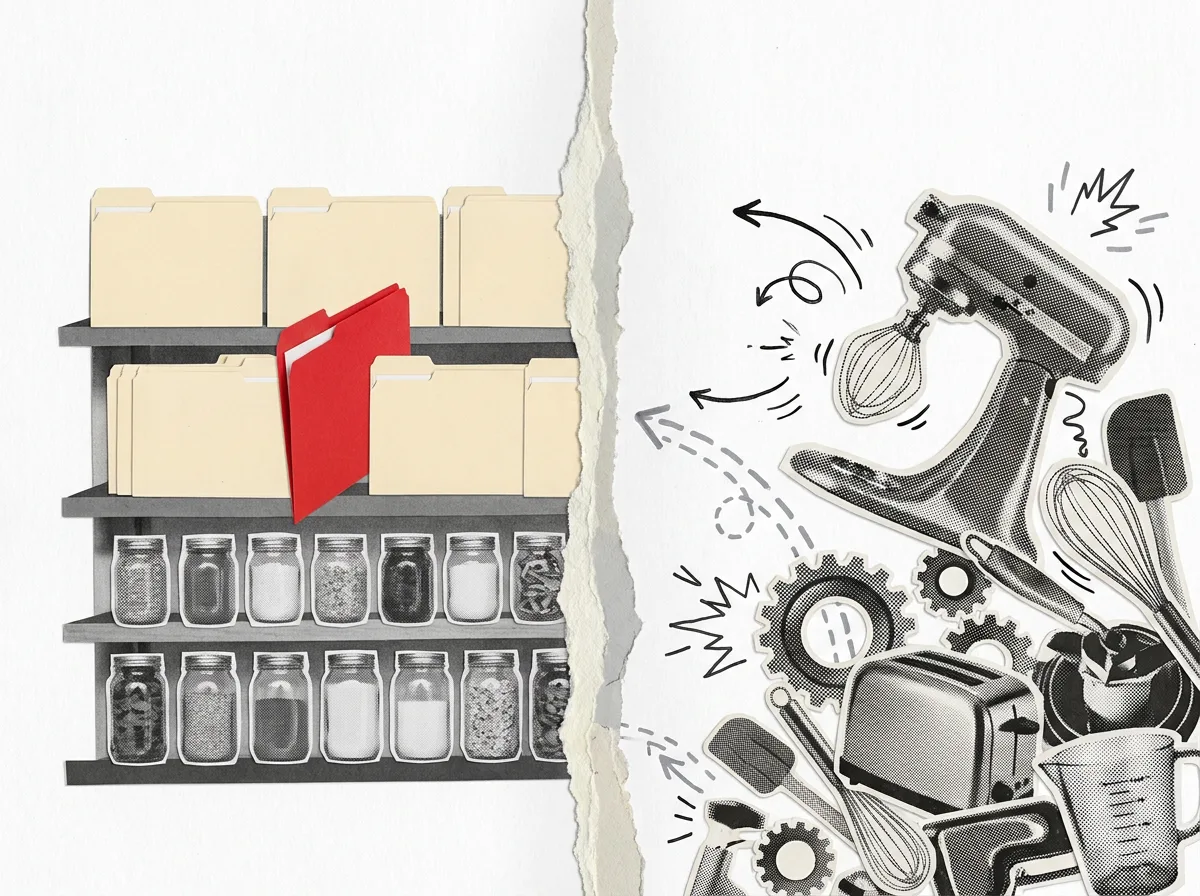
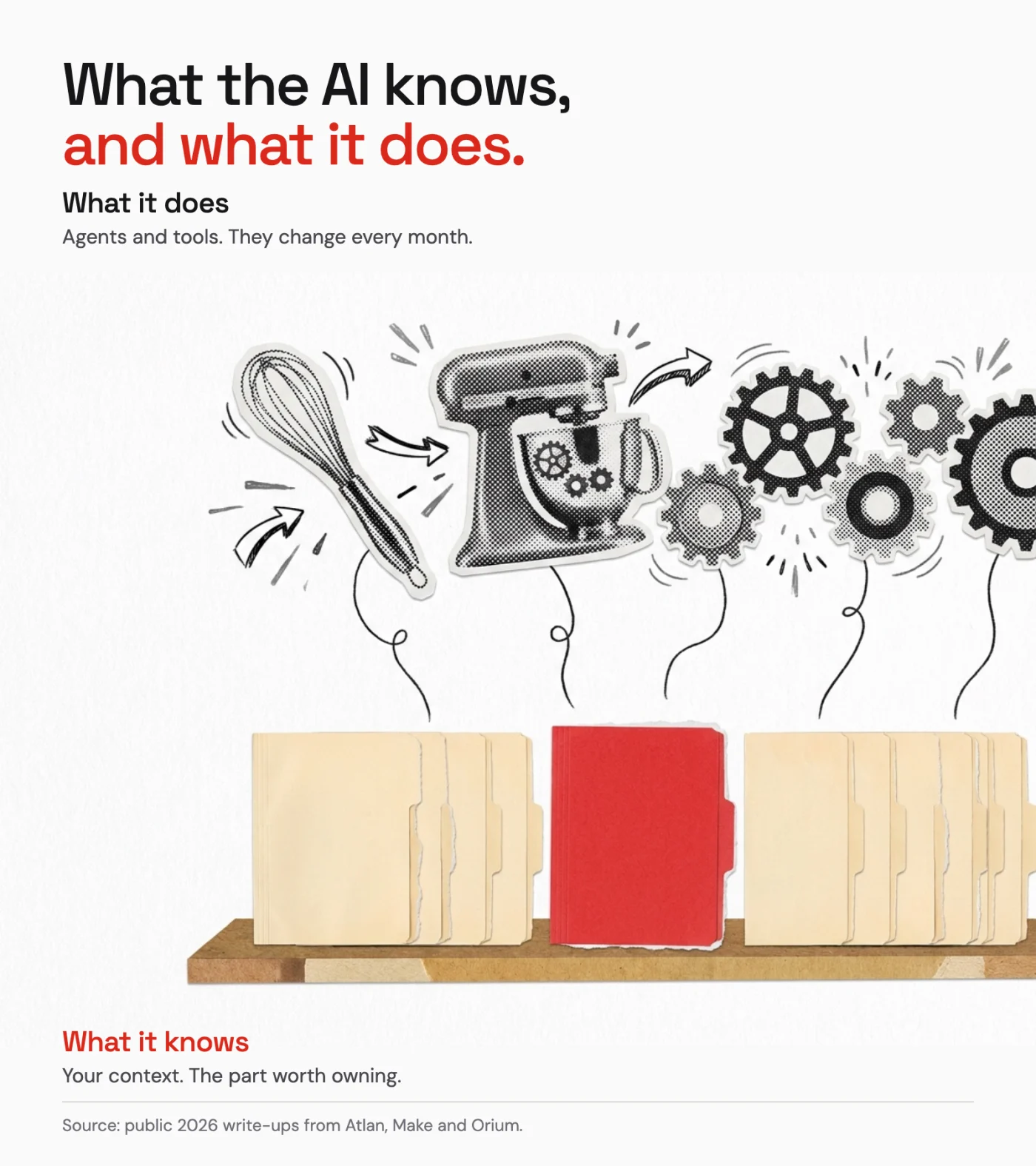
The people who write about AI for big companies started drawing a line down the middle of the stack. On one side, what the AI knows. On the other, what the AI does. For a long time those were treated as one blurry thing called "AI." Now they are getting separate names, separate products and separate budgets.
I think that is a game changer for small teams, and not for the reason you might expect.
What happened#
A few public write-ups make the split plain. A vendor guide from Atlan puts it in one line: context platforms govern what agents know, while agentic operating systems coordinate what they do. It also points to an analyst report that lists the two as separate technologies. I haven't read that report myself, so take that part as the vendor's reading of it.
Make's guide to the agentic operating system describes the "doing" side: a layer that gives agents memory, tools, decision logic and oversight so they can finish work that takes more than one step.
And Orium's look at 2026 says the quiet part out loud: what's underrated is everything that sits around the model. Not a smarter model. The machinery around it.
Put those together and you get a simple picture. The model is the engine. The agents are the hands. And the context, the knowledge of your business, your decisions and your way of doing things, is becoming its own layer that everything else depends on.
What it changes for small teams#
Here is the part I care about. Big companies are going to buy a context platform. Most small teams can't, and honestly, most don't need to.
Keep in mind where small businesses are right now. In one large survey this year, 76% said they use AI, and only 14% said it is fully part of how they run. Most people use AI. Few have it working. When the experts name context as its own layer, they are naming the exact thing that separates the 14% from everyone else.
Think of it like a restaurant. The agents are the cooks, and there will always be a new, faster cook to hire. The context is the pantry and the recipe book. If your pantry lives inside one cook's head, you start over every time a cook leaves. If it lives on your own shelf, any cook can walk in and get to work.
So the shift is not "buy more AI." It is: own the part that knows.
What I tested#
I've been working this way for a while, so this news felt less like a surprise and more like a name for something I already lived through.
In my working method, the context lives in plain files I own, and every AI I use reads from them before it starts. I wrote about why your AI forgets you if you want the longer story. The short version: the knowledge sits on one side, the AI tools on the other, and I can swap the tools without losing the knowledge.
The best proof I have is a simple test. I moved my whole working life, more than twenty projects, onto an encrypted drive that fits in my hand, plugged it in, and woke a fresh AI with no context at all. It read its way to a live project in one pass.
Here is my honest take on where this goes. The parts everyone is talking about, the files, the roles, the memory, are starting to look the same across many tools, and I expect them to become ordinary. What won't become ordinary is keeping that context true over time: handing work off cleanly, checking it with a second set of eyes, and catching it when it starts to drift. That part takes discipline, not software, and I'm still learning it myself.
What you can do this week#
Next time a new model or a new agent tool makes the headlines, ask one question before anything else: does it read from my context, or does it want to keep it? That one question will save you more than any feature list.
If you'd rather have that left side organized for your business, let's connect.