
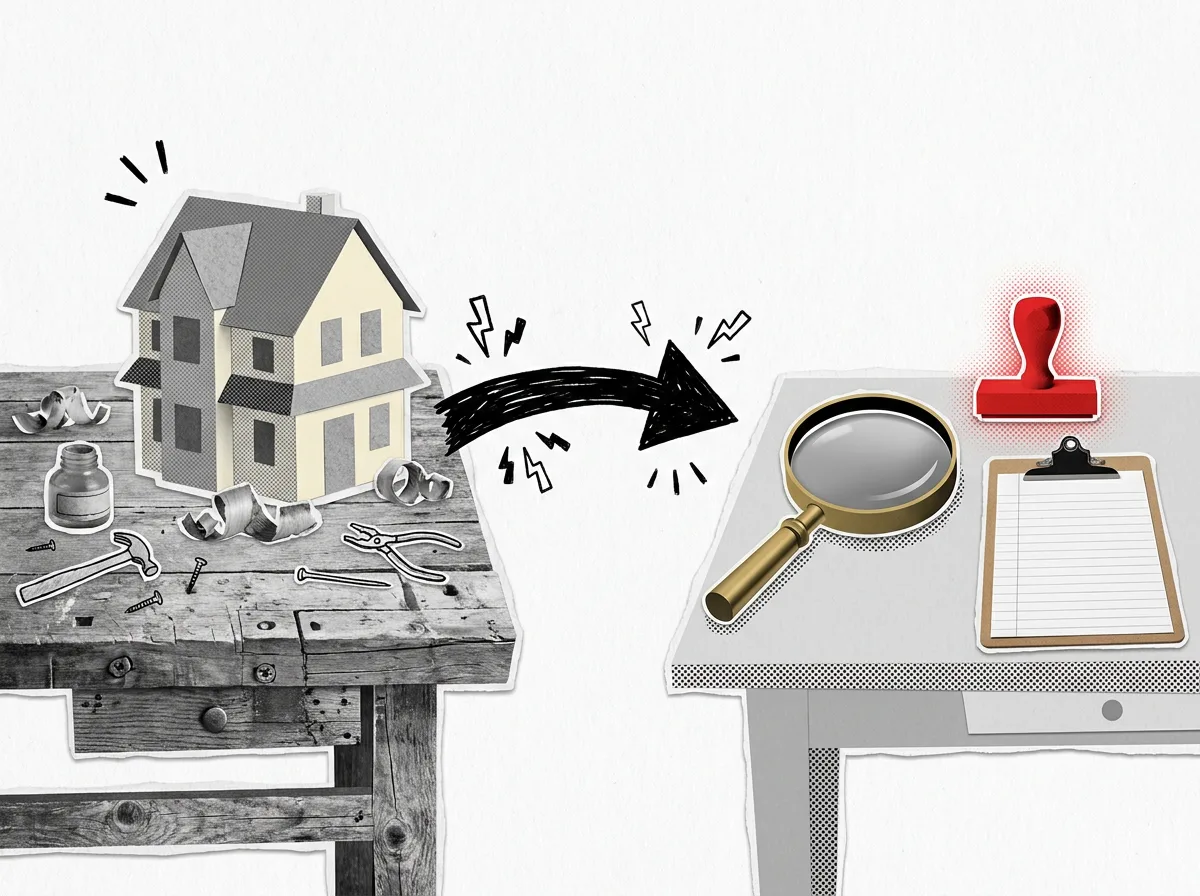
Ask an AI to grade its own homework and it will give itself an A. Every time.
That isn't a flaw in one model. It's how people work too. The person who wrote the report is the worst person to proofread it, because they read what they meant to write, not what's actually on the page. Our eyes fill in the gaps... and so do theirs.
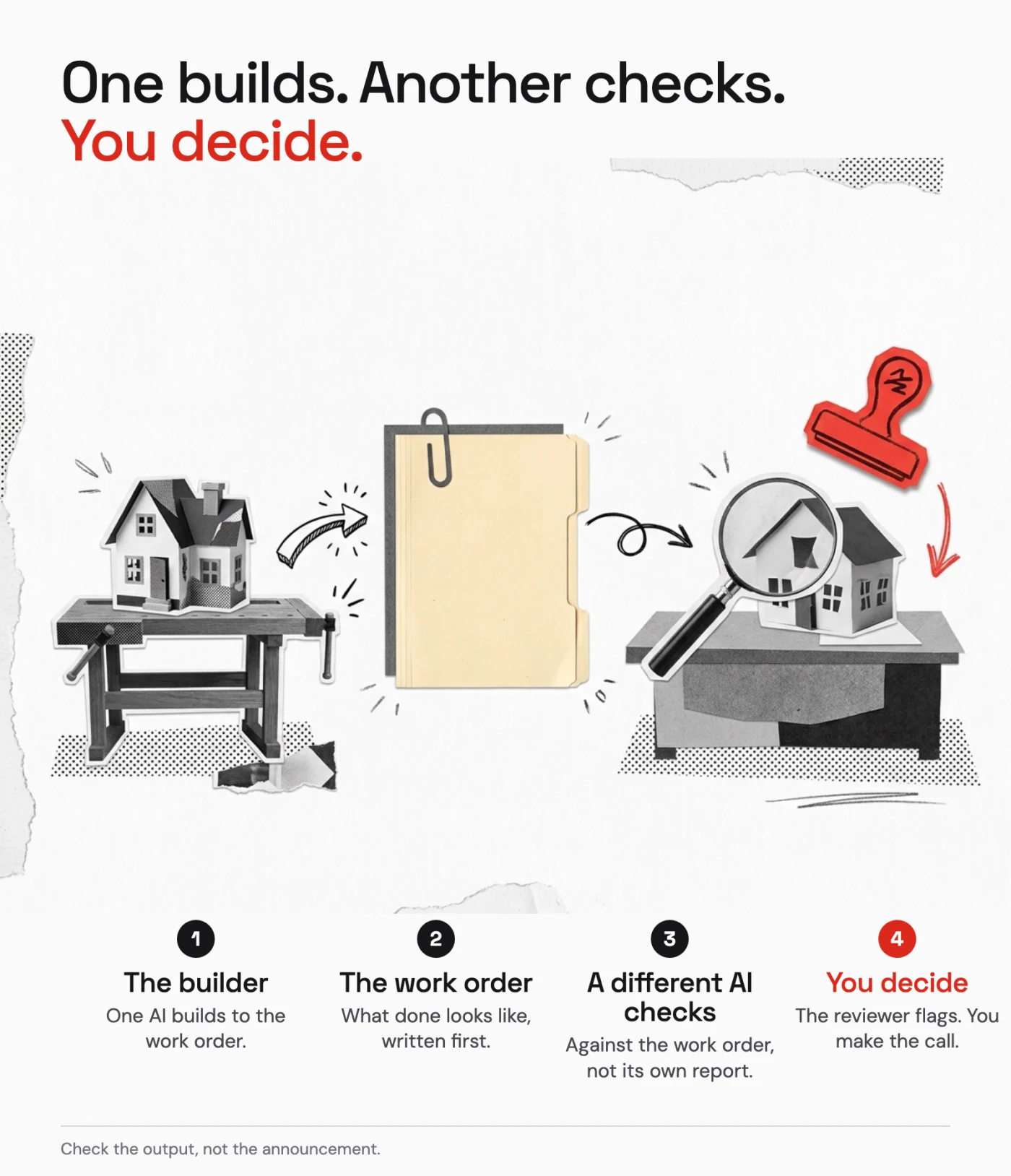
So in my working method there is one rule I don't bend: the builder never grades its own work. One AI builds. A different AI model checks. I make the final call.
If you're starting to hand real work to AI, a website, a report, a process that runs on its own, this one is for you. Trust is the whole game, and trust needs a second pair of eyes.
Why "done" is not the same as "right"#
Keep in mind what an AI is optimized to do: finish the task and tell you it's finished. It's very good at that second part.
Here is what that looked like in my own work. A small routine was supposed to back up a file every so often. One run reported "succeeded." It had written nothing. The run stopped early, never hit its failure branch, and announced success anyway. Nobody noticed for two days, until a separate check looked inside the destination folder instead of trusting the status message.
That's the lesson in one sentence: success is the output existing, not the report saying so.
The mistakes a second look caught#
I keep a running list of things that went wrong, what caused them, and what caught them. A pattern shows up quickly: almost nothing was caught by the one who did the work.
- The helpful rewrite. I gave an AI an exact command to run. It "improved" it, wrapping it in a little extra polish, and the new version didn't match what was allowed to run on its own. The job sat frozen for a day and a half, waiting for a click nobody gave. A separate scheduled check spotted the stalled run.
- The confident audit. An audit told me ten files were duplicates I could safely delete. A second look found they weren't copies at all: they were links to the originals, and deleting them would have wiped the real files. The advice was withdrawn before anyone acted on it.
- The claims nobody had backed up. Draft public copy made promises my own records couldn't support yet. A different AI model went through it claim by claim before anything went public, and found every single one missing its proof. Nothing shipped until the receipts were written down.
- The recount. One review re-counted 13,858 logged actions from scratch. It agreed with the original almost everywhere, and still corrected one overstated phrase. That's what a good check looks like: mostly "yes," and one honest "not quite."
None of these were dramatic. That's exactly why they matter. Small, confident mistakes are the ones that slip through.
How the habit works#
This is less complicated than it sounds. Three pieces, all at the level of habit:
- Write down what done looks like before the work starts. A short work order: the goal, the limits, and how anyone could tell it worked. If you can't describe done, no reviewer can check it.
- Hand the check to a different AI model. Not the same one in a new chat. A different model has different blind spots, so it catches different things.
- Check the output, not the announcement. Open the file. Load the page. Count the rows. A status message is a claim, not a receipt.
And I keep the last word. The reviewer flags, I decide. That's not autonomy, and I don't want it to be.
One thing I learned the hard way: write down which AI did the building. Early on, my work orders recorded the job but not the model, so I couldn't be sure the checker was truly a different one. Now every order names the builder.
Try this#
The receipt#
I'm still learning here. Every caught mistake becomes one more question the next work order asks up front.
I put those questions into a one-page checklist below. And if you'd like this kind of check built into how your business uses AI, let's connect.